
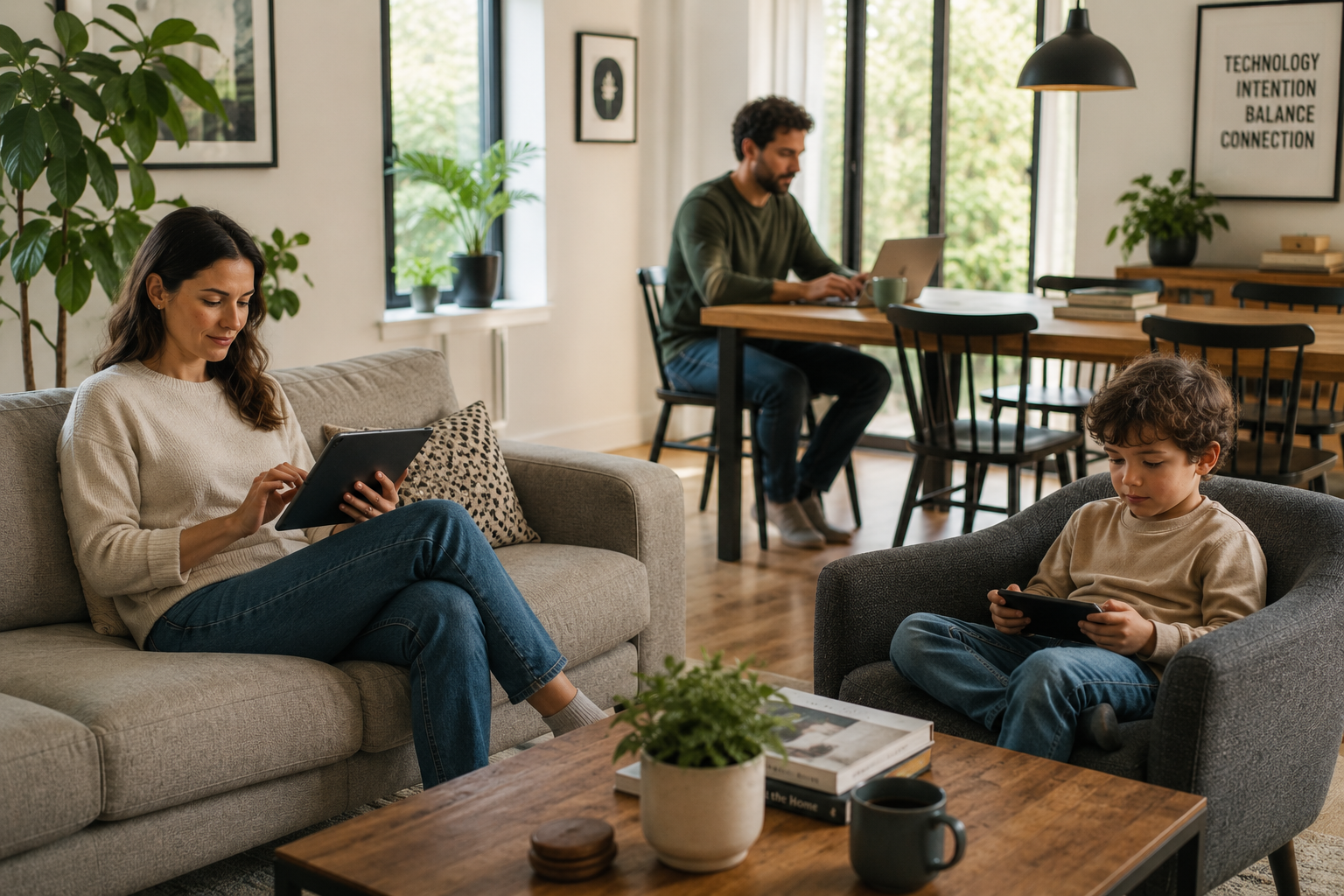
At home, technology is quietly taking control of daily life.
The phone lies next to the plate. The screen flickers, people are constantly swiping, and music plays in the background of the TV. Notifications interrupt conversations. Work emails keep pouring in, even after you have finished working. Even during moments of rest, you might still have a webpage open.
At first, this might not seem so bad. After all, most digital habits only develop over a long period of time, because technology is undeniably useful. It connects families, makes daily chores easier, provides entertainment, and supports work, study, and communication.
But over time, many families begin to notice a different change: screens seem ubiquitous, attention is fragmented, and peace in the home has vanished.
This does not mean that technology itself is bad. Rather, it means that the home environment requires our greater attention.
Fortunately, healthier technology habits usually do not require extreme rules or unrealistic ‘digital detoxes’. Often, it is the small changes that have the greatest impact in the long run.
A Balanced Home Usually Includes Digital Boundaries
Most people do not want to eliminate technology from their lives.
They simply want it to feel less overwhelming.
That distinction matters because overly strict rules often become frustrating quickly. Sustainable habits tend to feel flexible, realistic, and supportive rather than restrictive.
In many homes, balance starts by deciding which moments deserve fewer digital interruptions.
Not every space needs constant notifications, background videos, or endless scrolling.
Sometimes the healthiest change is simply creating small pockets of uninterrupted presence again.
Pay Attention to Automatic Screen Habits
Many technology habits happen without conscious thought.
Someone picks up their phone while waiting for water to boil. A television stays on even though nobody is watching closely. Family members sit together while each person quietly scrolls separate apps.
These behaviours are incredibly common because screens naturally fill pauses and empty moments.
One useful exercise is simply noticing where technology appears automatically throughout the day.
For example:
- During meals
- Before bedtime
- Immediately after waking up
- During conversations
- While watching something else already
- During short breaks at home
Awareness often comes before meaningful change.
Create One or Two Device-Free Spaces
Not every room needs to revolve around screens.
Many people find it helpful to keep certain parts of the home calmer and less digitally crowded.
For some households, that might mean:
A Screen-Free Dining Area
Meals feel more connected when phones stay away from the table.
A Calmer Bedroom Environment
Keeping devices away from the bed can help reduce late-night scrolling and constant notifications.
A Quiet Reading Corner
A small area without televisions or work devices can create a different mental atmosphere entirely.
The goal is not perfection. Even one intentionally quieter space can shift the feeling of a home noticeably.
Technology Habits Often Influence Energy Levels
One reason digital habits matter at home is because they affect how people feel mentally, not just how they spend time.
Constant alerts, background noise, multitasking, and endless scrolling can create subtle mental fatigue over time.
Many people do not realise how overstimulated they feel until they experience brief periods of genuine quiet again.
That’s why healthier technology habits often focus less on strict screen limits and more on reducing unnecessary digital intensity.
A calmer home usually comes from fewer interruptions rather than fewer devices alone.
Shared Expectations Can Reduce Household Friction
Technology sometimes creates tension at home because expectations are unclear.
One person feels ignored during conversations. Another feels pressured to respond to messages constantly. Someone wants quiet while another keeps videos playing in the background.
Simple conversations about shared habits can help reduce that friction without becoming overly formal.
For example:
- Should phones stay away during meals?
- Are work emails checked late at night?
- Is television background noise always on?
- When should shared quiet time happen?
These discussions do not need to feel rigid. They simply help households become more intentional about how technology fits into daily life.
Small changes usually last longer.
People often try dramatic resets after feeling overwhelmed by screen time.
Deleting every app, creating strict schedules, or banning devices entirely may feel motivating temporarily, but those systems can become difficult to maintain.
Smaller adjustments tend to work better long-term.
That might include:
- Turning off unnecessary notifications
- Charging phones outside the bedroom
- Having one slower evening per week
- Keeping televisions off during meals
- Creating short phone-free breaks during the day
These habits feel manageable because they fit naturally into everyday routines.
Children Often Notice Adult Technology Habits, Too
In homes with children, technology habits are rarely shaped only by rules. They are shaped by observation.
Kids often notice whether adults constantly check phones during conversations, multitask through meals, or remain distracted during downtime.
That does not mean parents or carers need perfect habits. Modern life is heavily digital for adults too.
But modelling balanced behaviour can matter more than strict restrictions alone.
Sometimes the most effective message is simply demonstrating that screens are useful tools rather than permanent background companions.
Make Entertainment Feel More Intentional
Streaming platforms, social apps, and endless content feeds make passive entertainment incredibly easy.
Hours can disappear without feeling especially memorable afterwards.
That does not mean entertainment is unhealthy. Relaxation matters. But people often enjoy technology more when it becomes slightly more intentional.
For example:
- Choosing a movie thoughtfully instead of endless browsing
- Listening to music without multitasking
- Watching one show fully instead of scrolling simultaneously
- Playing games socially rather than automatically
A small shift from passive consumption to intentional enjoyment can make screen time feel more satisfying.
Don’t Overcomplicate Digital Organization at Home
Technology stress sometimes comes from clutter rather than usage alone.
Shared devices become messy. Photos pile up unsorted. Passwords get forgotten. Notifications appear from unused apps. Files scatter across devices.
Simple organisation habits help reduce this background frustration.
Helpful examples include:
- Keeping shared calendars updated
- Organizing family photos occasionally
- Deleting unused apps
- Using consistent charging areas
- Backing up important files
- Keeping passwords secure and manageable
These systems quietly reduce everyday digital stress.
Quiet Moments Matter More Than They Used To
In modern homes, silence is no longer a luxury.
Surprisingly, screens are always nearby, music is playing, notifications appear constantly, or media content is playing in the background.
But moments of silence remain precious.
Not because silence is better in itself, but because excessive stimulation makes it difficult to think, rest, and concentrate.
Even short breaks can help:
- Sit outside and put your phone away.
- Don’t keep getting up to something else while reading.
- Check your notifications after you’ve finished your coffee.
- Prevent the next video from playing automatically at the end of the day.
These seemingly insignificant breaks are so refreshing because they occur less frequently these days.
Better Technology Habits for a Better Life
The healthiest digital habits are often those habits that make life at home easier, more harmonious, and more comfortable – not those habits that give life more control.
Technology will not disappear from our daily lives anytime soon. In many respects, it does improve the convenience and efficiency of communication.
The key is to ensure that technology becomes a supportive part of the home environment, rather than a tool that constantly demands attention.
The right balance varies from family to family.
However, most people will find that a little more awareness and a little less ‘digital autopilot’ is much more beneficial for their lives.
Frequently Asked Questions
How do you use technology healthily at home?
Good technology habits generally mean more balanced screen time, fewer distractions, conscious breaks, and clearer settings for when and how you use your devices.
Should you create a screen-free zone in your home?
Creating a screen-free zone can be very beneficial for many families, especially in the dining room or bedroom, as it can improve sleep quality and foster meaningful conversations.
How do you reduce phone distractions at home?
To reduce constant distractions, you can try turning off unnecessary notifications, charging your device away from public spaces, and scheduling short periods without your phone.
Is all screen time bad?
No. Technology can help us communicate, learn, stimulate creativity, relax, and improve our organisational skills. Our goal is to find a balance, not to avoid technology altogether.
Why does technology sometimes cause extra stress in our family life?
Constant notifications, multitasking, background media, and a general overabundance of electronic devices can leave us exhausted and prevent us from truly relaxing.
Conclusion
Nowadays, technology has permeated every aspect of our daily lives, and many habits have been automated. Screens fill our free time, notifications dictate our schedules, and our attention constantly shifts between devices.
Developing better habits does not mean we have to give up modern technology or cling to old habits. The greatest gains often come from the smallest adjustments: fewer distractions, creating quieter spaces, using technology more consciously, and making time to reorient ourselves.
A balanced family life does not necessarily mean we have to use less technology. Sometimes it simply means that technology does not dominate our lives every moment.