
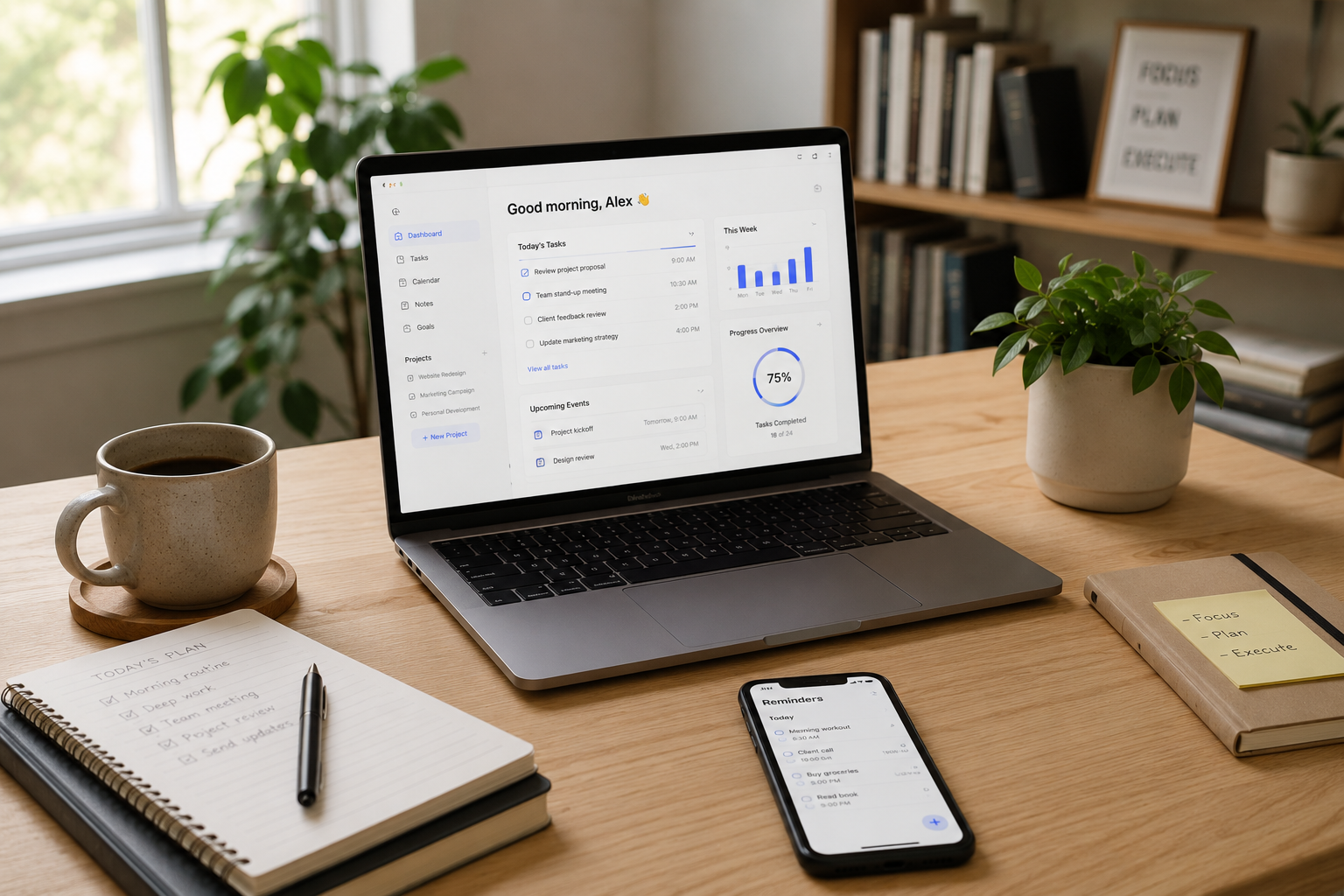
Not all productivity tools need to change your life.
Occasionally, the most useful tools simply help alleviate everyday annoyances, such as forgetting a grocery list, scattered notes, forgotten calendar reminders, or feeling overwhelmed by too many tasks at once.
The internet is full of complex systems that claim to deliver maximum efficiency. But in reality, most people do not want maximum efficiency at every moment. They simply want a more manageable daily routine.
This is where practical tools become crucial.
The hallmark of excellent productivity tools is that they unobtrusively support your daily life without requiring much effort on your part. They streamline your work in the background without extra digital burdens.
Below you will find several types of tools that are very useful for work, study, family life, and daily routines.
The Most Useful Tools Tend to Solve Small Problems
Many people are looking for a miracle cure to become organised, focused, efficient, and consistent.
In fact, small systems working together often improve efficiency. Shared calendars can prevent planning errors; note-taking apps can help you capture inspiration before it fades; simple timers can remind you to complete tasks on time. Individually, these changes may not seem significant, but together they can effectively reduce your mental load.
This is crucial because the goal shifts from “getting more work done” to “making daily tasks less fragmented.”
Digital Calendars That Reduce Mental Clutter
Many people underestimate how exhausting it can be to mentally track everything.
Appointments, deadlines, errands, birthdays, meetings, reminders — keeping all of it in your head creates unnecessary pressure.
A reliable calendar system can help externalize that mental load.
Popular options like Google Calendar or Apple Calendar work well because they are simple, accessible, and easy to maintain across devices.
Helpful uses include:
- Scheduling recurring tasks
- Adding reminders for important deadlines
- Blocking focused work periods
- Planning personal time intentionally
- Keeping shared family schedules organized
The goal isn’t filling every hour with productivity. It’s reducing the stress of trying to remember everything manually.
Notes Apps That Capture Information Quickly
Ideas tend to disappear when there’s nowhere convenient to store them.
A good notes app acts like a second brain for everyday life — a place for grocery lists, work thoughts, travel plans, reading notes, random reminders, or tasks you think of at inconvenient times.
Many people prefer tools like Google Keep because of their simplicity, while others enjoy more structured systems like Notion or Evernote.
What matters most is ease of use.
If capturing information feels complicated, the habit usually doesn’t last.
Task Managers Can Reduce Decision Fatigue
There’s a difference between having tasks and mentally carrying unfinished tasks everywhere.
Simple task management tools help reduce that constant background pressure.
Apps such as Todoist or Microsoft To Do are popular because they allow people to offload reminders into a trusted system.
One helpful approach is separating tasks into small categories:
Immediate
Things that need attention soon.
Upcoming
Tasks that matter but are not urgent today.
Someday
Ideas or plans you may return to later.
Breaking responsibilities into smaller groups often makes workloads feel more manageable mentally.
Focus Tools That Encourage Better Attention
Staying focused has become harder for many people, especially with constant notifications and multitasking.
Some productivity tools help by creating temporary boundaries around attention.
For example:
- Website blockers
- Focus timers
- Minimal writing environments
- Background sound apps
Tools like Forest or Freedom are often used to reduce interruptions during work or study sessions.
The important thing is using these tools gently rather than rigidly. Productivity systems become unsustainable when they feel overly restrictive.
Cloud Storage Helps Keep Files Accessible
One underrated productivity habit is simply knowing where your files are.
Cloud storage platforms like Google Drive, Dropbox, or Microsoft OneDrive help reduce the frustration of losing documents across devices.
Useful practices include:
- Storing important documents in clearly labeled folders
- Backing up photos automatically
- Keeping work files accessible across devices
- Saving copies of important records
A cleaner digital environment often saves more time than complicated productivity strategies.
Simple Automation Can Remove Repetitive Tasks
Some tasks repeat so frequently that automating them creates noticeable relief over time.
This does not require advanced technical skills.
Even small automations can help, such as:
- Automatic bill reminders
- Calendar syncing
- Recurring grocery lists
- Scheduled backups
- Email filters for newsletters or receipts
Services like IFTTT or Zapier are designed to connect everyday digital tools together.
The best automations are usually the ones you barely notice because they quietly remove friction in the background.
Physical Tools Still Matter Too
Not every productivity solution needs to be digital.
In fact, some people think more clearly away from screens.
Paper planners, sticky notes, desk calendars, or simple notebooks still work extremely well because they reduce digital overwhelm rather than adding to it.
A handwritten to-do list can sometimes feel calmer and more grounding than another app notification.
The most useful system is not necessarily the most advanced one. It’s the one you consistently return to.
Avoid Turning Productivity Into a Hobby
One subtle productivity trap is spending more time organizing systems than actually using them.
Downloading endless apps, color-coding elaborate schedules, or constantly rebuilding routines can create the feeling of productivity without necessarily improving daily life.
A useful rule is this:
If a tool creates more maintenance than relief, it may not be helping.
Simple systems often survive longer because they fit naturally into everyday routines.
Choose Tools Based on Your Real Life
Not every productivity tool works for every personality or lifestyle.
Someone managing family schedules may need different systems than a student, freelancer, or remote worker.
Before adopting new tools, it helps to ask:
- What actually feels difficult right now?
- What task repeatedly creates stress?
- What do I keep forgetting?
- Where does daily friction usually appear?
The best tools solve specific problems instead of trying to optimize everything at once.
That approach tends to feel much more sustainable.
FAQs
What are the best productivity apps for beginners?
Start with simple tools. Simple note-taking apps, calendar apps, or simple task management apps are generally better than overly complex systems.
Do productivity tools really help you focus?
They can help reduce distractions, organise tasks, and create structure, but habits and routines remain important. Tools work best when they support your daily behaviour.
Do you prefer one app for everything?
Some people prefer an all-in-one system, while others prefer using separate tools for notes, task management, and schedule planning. The best setup is the one you stick to most easily.
Are paper planners still useful?
“Yes. For many people, paper planners are less distracting, and it is easier to focus than electronic systems.”
How many productivity tools should I use?
Usually fewer than you think. Too many tools create clutter, not clarity. In general, a few reliable systems work better.
Conclusion
The goal of productivity tools is not necessarily to make you busier. Good tools can make life more organised, reduce unnecessary stress, and make daily tasks easier.
Sometimes this means using a trusted calendar; other times it is a note-taking app to jot down loose thoughts so they are not forgotten. Reducing the number of open tabs and simplifying file management can have the same effect.
The best tools are those that allow you to truly enjoy life without having to constantly pay attention to them.

Ethan Brooks writes about wellness, home living, sustainable habits, and modern digital lifestyles with a focus on practical everyday improvements. His content is designed to help readers create healthier routines, more comfortable spaces, and a more balanced approach to modern living through simple, thoughtful ideas.